
Over the past decade, a clear design trend has taken hold in homes and interiors across the UK. Grey walls, grey sofas, grey kitchens and neutral interiors have become the default. This move towards muted, minimalist colour schemes is often referred to as “greyification”.
While these interiors may look calm and stylish at first glance, many people are starting to feel the emotional downside. Grey can feel flat, cold and uninspiring when used too heavily. As a result, homeowners are now actively looking for spaces that feel warmer, richer and more uplifting.
This shift is especially important when it comes to spa spaces. A spa should never feel like an extension of everyday life. It should feel like an escape, an indulgence and something more than a little bit special.
The Rise Of Grey Interiors
Grey became popular for good reason. It feels safe, modern and neutral. Developers embraced it because it appeals to a wide audience, and homeowners followed suit because it felt clean and low risk.
However, when grey dominates an entire home, it can begin to affect how people feel within the space. Research from the UK-based mental health charity Mind highlights how colour and environment play a role in emotional wellbeing, particularly in relation to mood and relaxation. Environments that lack warmth or variation can feel draining rather than calming.
As people spend more time at home, they’re becoming more aware of how their surroundings make them feel. This has led to a growing desire for spaces that feel restorative rather than neutral.
Why Grey Can Be Bad For Mood And Relaxation
Colour psychology shows that humans respond emotionally to their surroundings, even if they’re not consciously aware of it. Overuse of grey and stark white can create spaces that feel sterile or unfinished.
Environments with limited colour variation can contribute to feelings of low energy and emotional flatness. For a spa space, this is a problem. A spa should help people unwind, slow down and mentally switch off. If the environment feels cold or lifeless, it works against the very purpose of the space.
Spas Should Feel Like An Escape From Everyday Life
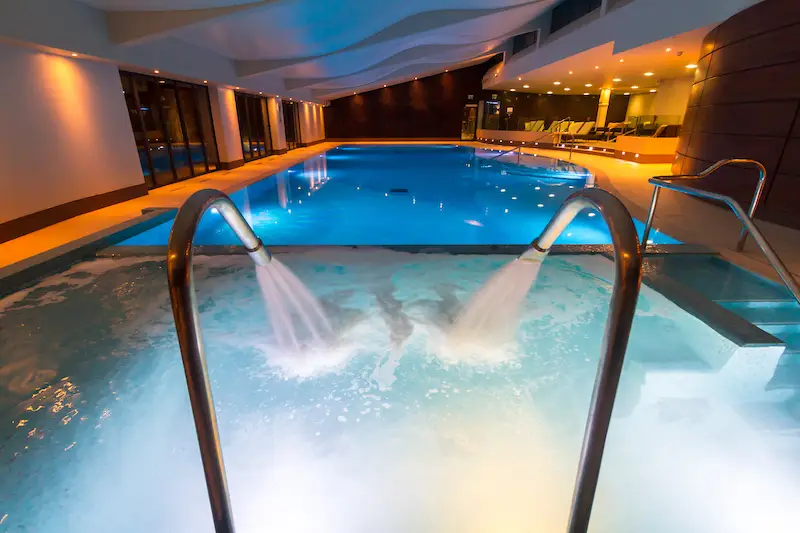
A well-designed spa should feel different the moment you step into it. Colour plays a key role in creating this sense of separation. Warmer tones, natural hues and layered textures help signal to the brain that this is a place for rest and recovery. Think soft greens, deep blues, earthy browns, warm terracotta or muted golds.
Why Stark White Often Misses The Mark In Spa Design
White is commonly associated with cleanliness, which is why it’s often used in bathrooms and wellness spaces. However, too much stark white can make a spa feel clinical rather than calming.
In a spa setting, white works best when balanced with colour, texture and warmth. On its own, it can feel harsh and uninviting during longer periods of use.
A spa should encourage you to linger. Soft colour contrasts, layered materials and gentle lighting all help create a space that feels welcoming rather than functional.
Using Colour Thoughtfully In Spa Spaces
Colour in spa design does not need to be loud or overwhelming. The goal is balance.
Effective spa spaces often use colour in the following ways:
- Earthy base tones to ground the space
- Natural colours inspired by water, stone and wood
- Accent colours to add depth and personality
- Soft lighting to enhance warmth and atmosphere
When colour is used thoughtfully, it enhances relaxation and makes the spa a more welcoming and inviting place to be.
Creating A Timeless Spa Rather Than A Trend-Led One
Design trends change quickly, but a spa should feel timeless. Overly grey or overly minimal designs often date faster than spaces that use natural colour palettes.
By focusing on warmth, depth and comfort, spa spaces can remain appealing for years to come.
Colour As Part Of The Wellness Experience
Wellness is not just about features like heat, water, or equipment. It’s also about how a space makes you feel emotionally.
Colour supports relaxation, helps signal downtime and creates a mental separation from daily stress. In a world where interiors are becoming increasingly neutral and uniform, spa spaces offer a chance to reintroduce warmth and individuality.
By stepping away from grey-heavy design and embracing thoughtful colour choices, spa environments can truly deliver on their promise of escape.
As grey interiors begin to lose their appeal, people are looking for spaces that feel more human, more calming and more uplifting. A spa should lead the way in this shift.
If you’re considering creating or rethinking a spa space, colour should never be an afterthought. It’s a core part of how the space will be experienced and enjoyed.
To explore how a spa can be designed as a true escape from everyday life, contact us to start the conversation.